
Our resources
News

Published in the October 2022 issue of the magazine
Read the ADEME dossier…

Published in the October 2022 issue of the magazine
Read the article in Les Echos…
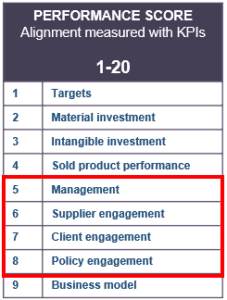
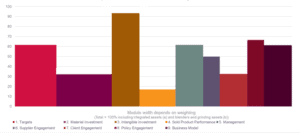
Following the public consultation, we are proud to share the new version of ACT qualitative indicators for module 5 (management), module 6 (supplier engagement), module 7 (client engagement), and module 8 (policy engagement).
These new indicators are being integrated into the forthcoming ACT sectora…

After local programs in Europe and the Americas, the ACT Initiative is developing from this year its presence in Japan, with the support of local partners.
As a first step, ACT co-developers ADEME and CDP introduces the methodology in an event organized in Tokyo on 7th July, for an audience of 100 p…

Following the global goal of the Article 7 of the Paris agreement of "enhancing adaptive capacity, strengthening resilience and reducing vulnerabilities to climate change", the ACT Initiative has developed the ACT Adaptation methodology. It aims at assessing the adaptation strategy of companies from…
What is this consultation about?
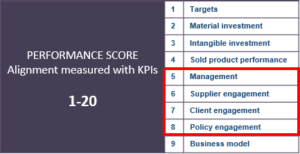
The Assessing low-Carbon Transition (ACT) initiative is proposing an update of four of the qualitative modules that form part of the ACT Performance score. These modules appear in the same form in many of the ACT Methodologies, though some have sector-specific elemen…
The ACT Initiative is glad to announce the release of the ACT Iron & Steel methodology!
Steel production is highly energy- and emissions-intensive; among heavy industries, the iron and steel sector ranks first when it comes to CO2 emissions, and second when it comes to energy consumption. The lo…
The ACT-DDP project aims to support the low-carbon transition of high emitting sectors in Mexico and Brazil. This 2-year collaboration enabled the construction of bottom-up sectoral pathways for Mexico's urban public transport sector, Brazil's meat production sector, and cement and power generation …

“Which company performed best this year?”
“Ørsted.”
“Oh, the same as last year… What about the top ten?”
“Well, it’s also the same ten companies as last year but in a slightly different order.”
“Nothing new in the Electric Utility transition world then?”
“It’s not always about the top performers.”
“…
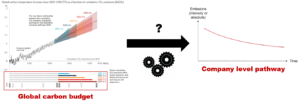
ACT assesses company’s decarbonization strategy and associated transition plan in regard to its decarbonization challenges. To do so, ACT compares, among other things, greenhouse gas emissions targets and performance of companies against theoretical trajectories, which are obtained thanks to “alloca…

Advancing corporate decarbonization - public and private synergies and future regulatory frameworks - Hotel Radison Blu Glasgow 5th November 10am-16pm
Organized by CETESB and ADEME, this in-person event focuses on Brazil's Climate Agenda and includes :Introductions and panel moderation from Patríc…
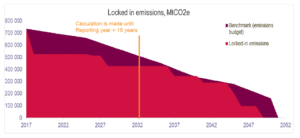
ACT assessments provide companies with a feedback report outlining best practice and opportunities for improvement as well as a rating to track progress.
These assessments are carried out following sectoral methodology and, from the end of May 2021, Aluminium, Chemicals, Glass and Pulp & Paper c…
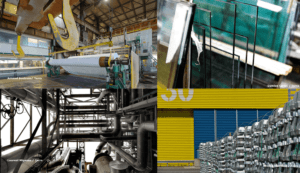
Interested and concerned about the low carbon transition requirements for these high emitting sectors?
Contribute to the final development stage of the ACT methodologies by taking part in the public consultation as we would like to hear from you on the gaps and strengths of the methodology. Your inp…
Are referred as “avoided emissions” of an organization the emission reductions achieved by its activities, products and/or services, when these reductions are achieved outside its scope of activity. These last years, more and more companies claim avoided emissions to highlight their efforts to the g…
The ACT initiative provided more than 100 companies with a confidential assessment of their climate strategy and with training on the methodology used through multiple road-test over the past 5 years free of charge. The individual report summarising key findings and recommendations was particularly …

Comparing the 2019 and 2020 Climate and Energy Automotive Benchmarks.
China, Japan, South Korea and the European Union are some of the world’s biggest car markets. One other thing they all now have in common is a commitment to reach net-zero emissions by 2050 or 2060. The second biggest car market i…
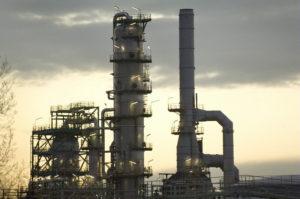
Transforming electricity systems is crucial to decarbonisation. In 2018, 62.9% of global electricity was still generated from fossil fuels, but low-carbon generation, particularly from wind and solar, is growing significantly. Excitingly, electrification can enable other high emitting sectors such a…

As all companies have their role to play in the low-carbon transition, the ACT initiative developed the ACT Generic methodology which aims to assess the readiness to transition to the low-carbon economy of multi-activity companies as well as companies operating in sectors that will not be covered by…
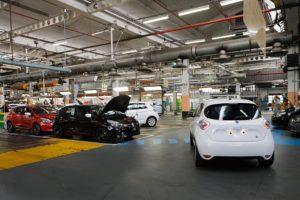
The World Benchmarking Alliance is using ACT methodologies to conduct its Energy and Climate Benchmark since 2019. The first benchmark was published in December for COP25 and ranked 25 most influent auto manufacturers using their ACT scores. On the July the 6th, WBA will release their new benchmark …

Last chance to join the group of pioneer companies from the Oil & Gas, Transport and Cement sectors road-testing the innovative ACT methodologies which assess the alignment of their low carbon strategy with sectoral decarbonisation pathways. Participating companies will benefit from a free asses…

The ACT initiative will launch sectoral methodologies development for the metal (iron and steel), agriculture and agro-food sectors as well as a generic methodology for conglomerate companies and companies operating in sectors that will not be covered by ACT methodologies (see sign up/consultation p…

ACT – Assessing low Carbon Transition methodologies for Cement, Oil & Gas and Transport sectors are open for public consultation. This is a unique opportunity to contribute to the only international initiative of the UNFCCC secretariat Global Climate Agenda developing sectoral methodologies as a…
The ACT initiative is launching the road-test of the ACT methodologies (Assessing low-Carbon Transition) for Cement, Oil & Gas and Transport (transport operators and providers of transport services, for passengers and goods) sectors. This road-test will allow participating companies to benefit f…
WBA is developing amongst others the Climate and Energy Benchmark to accelerate the global decarbonisation and energy transformation. By using the Assessing low-Carbon Transition methodologies, this benchmark measures and ranks the most influencial companies across high-emitting industries, includi…
In the medias

The ACT methodology is currently being adapted for the finance sector
Published on 19 July 2023
Read AEF dispatch no. 693665

Banque de France rating: from CSR indicator to Climate indicator
Published on 12 July 2023
Listen to the La Radio podcast
How can we go beyond best-in-class ESG ratings to build a genuine net-zero approach?
Published on 16 June 2023
Read the Finance ClimAct article
Decarbonisation: how can we adapt our business models?
Published in the October 2022 issue of the magazine
Read the ADEME dossier
The Banque de France is preparing a climate rating for businesses
Published in the October 2022 issue of the magazine
Read the article in Les Echos